
Fire Safety Communication Singapore: How SCDF-Compliant Teams Stay Coordinated During Emergencies

When a fire breaks out, the first few minutes define everything. Clear instructions, fast updates, and coordinated evacuation efforts can mean the difference between a controlled incident and a chaotic emergency. That is why effective fire safety communication strategies are becoming a core priority for facilities managers, fire safety managers, and emergency response teams across commercial buildings.
The challenge is that communication systems often fail when they are needed most. Mobile networks become congested, calls go unanswered, and teams lose visibility across floors and evacuation zones. In high-occupancy buildings, fragmented communication can also create operational delays and potential compliance gaps during an emergency response.
This guide explains how Singapore organisations can strengthen emergency coordination using push-to-talk (PTT) communication systems, while supporting alignment with SCDF and BCA emergency preparedness expectations.
What Fire Safety Communication Requirements Apply in Singapore
In Singapore, emergency communication forms part of broader fire safety and emergency preparedness requirements governed by the Singapore Civil Defence Force (SCDF) and the Building and Construction Authority (BCA).
Commercial buildings with larger occupant loads are generally required to maintain Emergency Response Plans (ERP), evacuation procedures, and communication systems that support coordinated emergency response. SCDF guidelines also outline requirements around emergency voice communication systems, fire command centres, evacuation drills, and inter-team coordination during incidents.
For example, SCDF’s Fire Code 2023 includes provisions for emergency voice communication systems in larger buildings to support occupant notifications and coordinated evacuation management.
Teams reviewing compliance requirements can refer directly to SCDF Fire Safety Guidelines and SCDF Emergency Response Plan Requirements for the latest official guidance.
While every building has unique operational needs, one common requirement remains consistent: communication during an emergency must be immediate, reliable, and easy to manage under pressure.
Why Standard Phones Fall Short During an Emergency
Phones work well for daily communication. Emergencies are different.
During a fire incident:
Mobile networks can become overloaded
Calls require dialling and waiting
Multiple people cannot receive updates simultaneously
Staff may miss calls while evacuating occupants
Signal quality can drop in stairwells, basements, and lift lobbies
In a live evacuation, every second matters. Teams need instant communication across multiple groups at once. Standard mobile calls are simply not designed for fast-moving emergency coordination.
That is where push-to-talk communication becomes essential.
How Push-to-Talk Supports Fire Safety Communication
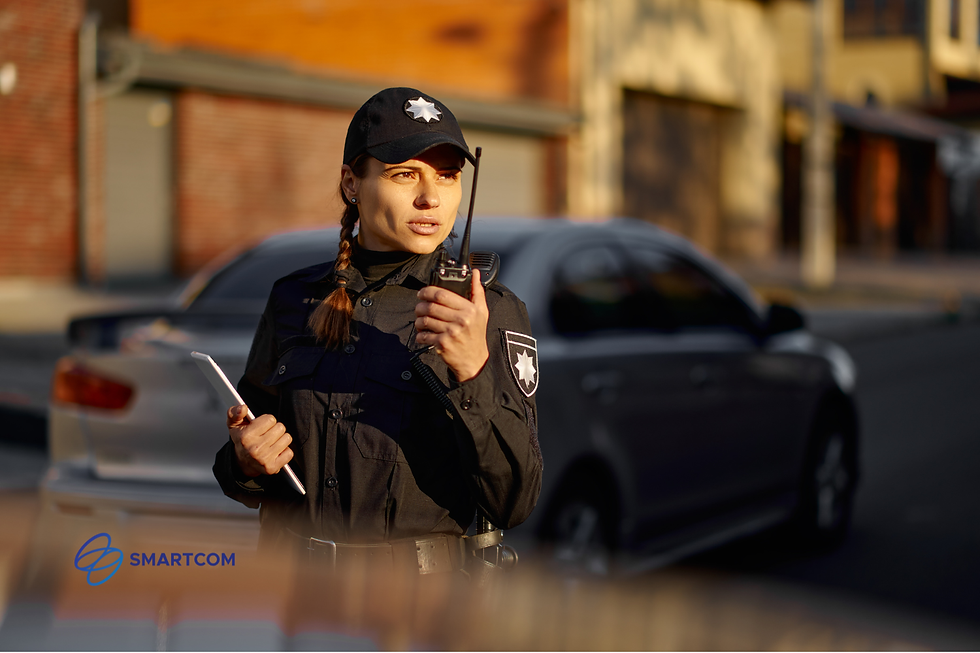
Push-to-talk (PTT) systems allow teams to communicate instantly with a single button press. There is no dialling, no waiting for someone to answer, and no delay in broadcasting urgent updates.
For fire safety teams, PTT acts as the communication backbone during:
Building evacuations
Incident command coordination
Security and fire warden updates
Inter-floor communication
Real-time status reporting
Coordination with responding emergency services
Unlike traditional radios limited to a single repeater setup, modern LTE-based PTT solutions can operate across wider coverage areas using cellular networks and managed communication infrastructure. This allows facilities teams to maintain communication continuity across large properties, multiple buildings, and underground areas.
Organisations reviewing emergency communication upgrades can explore Smartcom’s Emergency Services solutions for operational use cases across Singapore emergency response environments.
How does PTT help during a building evacuation?
PTT helps during a building evacuation by allowing fire wardens, security teams, and incident commanders to communicate instantly across all evacuation zones at the same time. Teams can quickly confirm floor clearance status, redirect occupants away from affected areas, report blocked exits, and coordinate assistance for vulnerable individuals without delays caused by phone calls or fragmented messaging.
Can PTT be used to coordinate with SCDF officers on-site?
Yes. PTT systems can support clearer coordination between in-building emergency teams and responding SCDF officers by helping incident commanders relay updates quickly, maintain situational awareness, and communicate operational details during handover. Radio interoperability and structured communication workflows are especially important during larger or multi-agency incidents.

Key Use Cases for Emergency Communication in Buildings
Strong emergency communication systems improve coordination across every stage of a fire incident.
Fire Warden Coordination Across Floors and Zones
Fire wardens need immediate visibility into evacuation progress. PTT enables wardens on different floors to report conditions in real time, helping incident commanders identify delays or safety risks quickly.
Incident Commander to Security and Reception
Security teams and front-of-house staff often become key information points during emergencies. Instant communication helps maintain alignment between building management, security personnel, and evacuation teams.
Lift Lobbies, Carparks, and Basement Areas
Basements and enclosed infrastructure areas are common communication blind spots for mobile devices. Reliable radio and LTE PTT coverage helps teams maintain communication continuity in these higher-risk operational zones.
Real-Time Incident Updates
Emergency situations evolve rapidly. Smoke spread, blocked access routes, or changes to evacuation strategy must be communicated immediately to minimise confusion and maintain occupant safety.
What Makes a Radio Suitable for Fire Safety Use
Not all communication devices are designed for emergency response conditions. Fire safety communication equipment must remain reliable in stressful, noisy, and unpredictable environments.
Key considerations include:
Rugged and Dust/Water Resistant Design
Emergency conditions expose devices to heat, moisture, dust, and physical impact. Ruggedised radios help maintain communication reliability during demanding operations.
Long Battery Life
Fire incidents and evacuation management can extend for hours. Teams need devices capable of lasting through prolonged emergency situations without interruption.
Clear Audio in Noisy Environments
Alarm systems, crowd movement, ventilation systems, and firefighting activity create extremely noisy environments. Devices with strong audio clarity and noise suppression help reduce communication errors.
Hands-Free Communication Support
Earpieces and remote speaker microphones allow responders to communicate while managing evacuation duties or assisting occupants.
Facilities teams evaluating device options can review Smartcom Push-to-Talk solutions for communication systems suited to emergency response operations.
Inter-Agency Coordination During a Fire Incident
Once Singapore Civil Defence Force officers arrive on-site, communication clarity becomes even more important.
Building teams must provide fast, accurate updates regarding:
Fire location and spread
Evacuation status
Occupant accountability
Access constraints
Hazard areas
Building system conditions
PTT systems allow incident commanders to stay connected while actively managing the situation on the ground. Instead of relying on repeated phone calls, teams can maintain continuous operational communication across all responders.
Radio interoperability also becomes an important consideration for organisations operating large facilities, transport infrastructure, industrial sites, or multi-agency emergency plans.
Learn more about interoperability-focused communication systems through Smartcom’s article on Radio Interoperability for First Responders.
Setting Up Fire Safety Communication for Your Building
For facilities managers and emergency response leaders, reviewing communication readiness should be part of every broader fire safety review.
A practical fire safety communication strategy should assess:
Coverage gaps across the building
Communication workflows during evacuation
Coordination between fire wardens and incident command
Basement and stairwell communication reliability
Integration with emergency response procedures
Device readiness and battery management
Inter-agency coordination requirements
As Singapore buildings continue strengthening emergency preparedness standards, reliable communication systems are becoming a critical operational requirement rather than an optional upgrade.
Smartcom supports emergency response teams, facilities managers, and commercial building operators across Singapore with communication solutions designed for fast, reliable coordination during critical incidents.
To explore solutions for your building, visit our Emergency Services page and review how modern PTT systems can strengthen your overall fire safety communication strategy.


Comments