
Radio Interoperability for First Responders: Fix Cross-Agency Communication Gaps
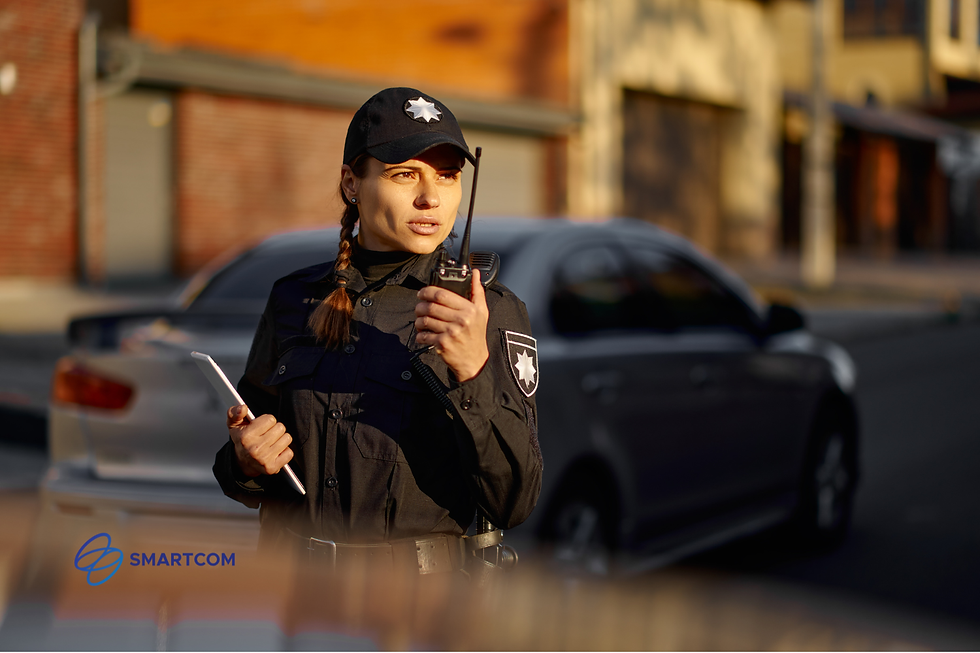
Radio interoperability is the ability of different radio systems, devices, or agencies to communicate with one another in real time, even if they operate on different frequencies, networks, or technologies. It ensures seamless communication across VHF, UHF, digital radio, and LTE Push-to-Talk (PTT) platforms during joint operations.
In practical terms, radio interoperability allows police, fire, EMS, and civil defence teams to coordinate instantly, without switching devices, relaying messages manually, or relying on temporary communication patches.
What It Means in Real Operations
In Singapore, frontline responders operate under different agencies such as the Singapore Police Force (SPF) and the Singapore Civil Defence Force (SCDF), overseen by the Ministry of Home Affairs (MHA). Each may use distinct radio networks optimised for their operational requirements.
However, emergencies rarely stay within a single agency’s boundaries.
A road traffic accident may involve police for traffic control and investigation, SCDF for rescue and fire suppression, and EMS for medical evacuation.
A high-rise fire may require coordination between fire commanders, police perimeter units, and medical teams.
Major public events or national celebrations require integrated command across multiple services.
Without radio interoperability, communication can become fragmented. Messages may need to be relayed through control rooms, secondary devices, or liaison officers. That adds delay, and delay during emergencies can increase risk.
With interoperability in place, all responding units can communicate directly, securely, and in real time.
The Purpose of Radio Interoperability
Radio interoperability exists for one reason: operational clarity under pressure.
It delivers:
Faster coordination between agencies
Reduced response times during critical incidents
Fewer communication errors
Improved officer and civilian safety
Stronger command-and-control during large-scale events
Singapore’s dense urban environment – from MRT networks to high-rise residential estates – requires rapid, coordinated response. Coverage of major incidents by Channel News Asia has shown how multi-agency deployments are often necessary during fires, transport disruptions, and security operations.
When seconds matter, interoperable communication systems are foundational.
Why Cross-Agency Communication Gaps Still Exist
Despite modernisation efforts, communication gaps still occur in many operational environments.
Legacy Radio Systems
Many agencies continue to operate legacy VHF/UHF radio systems. These systems:
Operate on different frequency bands
Use varying encryption standards
Come from different hardware vendors
Follow independent procurement cycles
This creates fragmented infrastructure where direct cross-agency communication is not always technically possible.
LTE and Digital Push-to-Talk Adoption
As LTE-based Push-to-Talk systems gain traction, some units adopt broadband communication platforms for improved data and voice capabilities. Others remain on traditional radio networks.
The result is a split ecosystem:
Legacy radio on one side
LTE PTT on the other
Without bridging solutions, these systems cannot communicate directly.
Mutual-Aid Challenges
During joint operations, agencies may rely on:
Temporary communication patches
Shared handheld radios
Manual message relays via command centres
These workarounds increase delays and introduce the potential for miscommunication, especially during high-stress scenarios.
What Causes Radio Interoperability Issues?
Radio interoperability issues are typically caused by incompatible frequencies (VHF vs UHF), different communication technologies (analog, digital, LTE), varying encryption protocols, separate procurement systems, and a lack of integrated gateway solutions that connect legacy and modern networks.
Radio Interoperability in Singapore: Why It Matters
In Singapore’s high-density environment, agencies often respond together. Clear, connected communication is critical for that coordination to work.
A Multi-Agency Response Environment
Singapore’s operational landscape is uniquely complex:
High-rise residential clusters
Underground MRT infrastructure
Maritime traffic and port operations
Large-scale public gatherings such as National Day celebrations
Island-wide emergency preparedness exercises
The SCDF regularly conducts public emergency preparedness initiatives, while the Infocomm Media Development Authority (IMDA) oversees national telecommunications infrastructure to ensure resilience.
In this environment, interoperability supports real-world readiness.
High Stakes in Seconds
A delayed evacuation order. A missed instruction during a rescue. A garbled transmission during a perimeter lockdown.
In dense urban settings, communication breakdowns can escalate operational risk quickly. Interoperable systems reduce that vulnerability by allowing direct, real-time coordination across agencies.

How Radio Interoperability Works in Practice
Radio interoperability isn’t just a concept. It’s built into the way systems are connected on the ground. Here’s how different networks, devices, and agencies are linked in real-world operations without replacing everything they already use.
Radio Gateways and Bridges
The most practical way to achieve interoperability is through radio gateways and bridges.
Gateways connect different radio systems (e.g., VHF to UHF).
Bridges allow legacy radio networks to communicate with LTE Push-to-Talk platforms.
Cross-band and cross-network links enable secure, real-time communication across agencies.
Rather than replacing entire fleets of radios, gateway solutions integrate existing systems, making them interoperable without full infrastructure overhaul.
Linking Legacy Radios with LTE PTT
Modern interoperability solutions allow:
VHF/UHF radios to connect to LTE-based Push-to-Talk
Centralised command centres to patch multiple agencies into a shared channel
Mutual-aid talkgroups to be activated instantly
Scalable deployment for district-level or island-wide coordination
For example:
During a police-assisted rescue operation, fire commanders and ground officers can speak directly without device switching.
In a multi-agency disaster simulation, LTE-equipped supervisors and radio-equipped frontline teams remain connected.
At major public events, control rooms can bridge security, medical, and enforcement teams into unified communication groups.
Telecommunications providers experienced in multi-industry deployments – including emergency services, transport operators, and security teams – are well positioned to support such integration.
Benefits of Radio Interoperability for Emergency Services
When systems connect smoothly, the impact is immediate. Interoperability strengthens response speed, improves safety on the ground, and ensures communication holds up across the entire operational landscape.
Faster Incident Response
Direct cross-agency communication reduces message relays and accelerates decision-making. This supports instant response in fast-evolving scenarios.
Improved Officer Safety
When officers communicate directly:
Instructions are clearer
Situational awareness improves
Misinterpretation risk decreases
This enhances both responder and public safety.
Island-Wide Communication Coverage
Interoperable systems support consistent coverage across districts, which is particularly valuable during national-level operations or large-scale incidents.
Smartcom has extensive telecommunications experience across emergency services, security operations, transport infrastructure, and large-scale public environments, which are sectors where communication reliability directly impacts operational success.
Best Practices for Implementing Radio Interoperability
Strong interoperability doesn’t happen by accident. It requires careful planning, the right integration strategy, and regular coordination across agencies to ensure systems work when they’re needed most.
Assess Existing Infrastructure
Agencies should:
Map current radio systems
Identify frequency bands and encryption standards
Audit compatibility gaps
Understanding existing infrastructure is the first step toward integration.
Use Scalable Gateway Solutions
Instead of full rip-and-replace projects:
Deploy radio gateways
Integrate legacy systems with LTE platforms
Maintain existing investments while enhancing capability
This approach is cost-effective and operationally practical.
Plan for Mutual-Aid Scenarios
Preparedness is key.
Predefine shared interoperability channels
Conduct regular cross-agency testing
Integrate communications into emergency preparedness drills
Singapore’s emergency frameworks emphasise readiness and coordination, and communication systems should align with those principles.
The Future of Radio Interoperability in Singapore
Singapore continues advancing digital infrastructure and LTE adoption. Hybrid communication environments – combining traditional radio with broadband PTT – are becoming the norm.
Urban density, complex infrastructure, and evolving security landscapes require stronger cross-agency integration.
National resilience depends on reliable, unified communication.
Telecommunications providers that understand emergency services alongside transport, security, and enterprise sectors are better equipped to design integrated interoperability solutions that scale across operational demands.
Closing the Communication Gap
Radio interoperability is critical for modern emergency response. It ensures police, fire, EMS, and civil defence teams can communicate clearly and instantly, regardless of the radio systems they use.
Linking legacy radios with LTE Push-to-Talk and mutual-aid channels is one of the most practical ways to close communication gaps without replacing entire fleets of equipment.
For agencies reviewing their communication infrastructure, Smartcom’s Emergency Services solutions outline how interoperable systems, gateway technologies, and integrated platforms can support operational readiness. Equipment and integration options are also available via their shop.
Preparedness is not just about personnel and protocols. In fact, it depends on communication systems that work together when it matters most.



Comments